
Australia's card surcharge ban affects every cosmetic clinic. Learn what it means for merchant fees, pricing and profitability as a cosmetic nurse or clinic owner.

Melissa Isaia

From 1 October 2026, Australian businesses will no longer be permitted to add a separate surcharge when customers pay using eftpos, Mastercard or Visa debit, prepaid or credit cards - though merchant fees from banks and payment providers still apply, and cosmetic nurses and clinic owners will need to absorb or price for that cost.
For cosmetic nurses and aesthetic clinic owners, this is an important financial change. While patients will no longer pay a card surcharge, your clinic will still incur merchant fees charged by banks and payment providers.
These processing fees will need to be managed through clinic pricing, operational efficiency, patient retention and improved profitability.
This article provides general guidance for cosmetic nurses and aesthetic clinics, not financial advice - speak with your accountant or bookkeeper about your clinic's specific figures.
What could it cost your cosmetic clinic?
Merchant fees vary between providers. Using an estimated average fee of 1.5%, the approximate cost would be: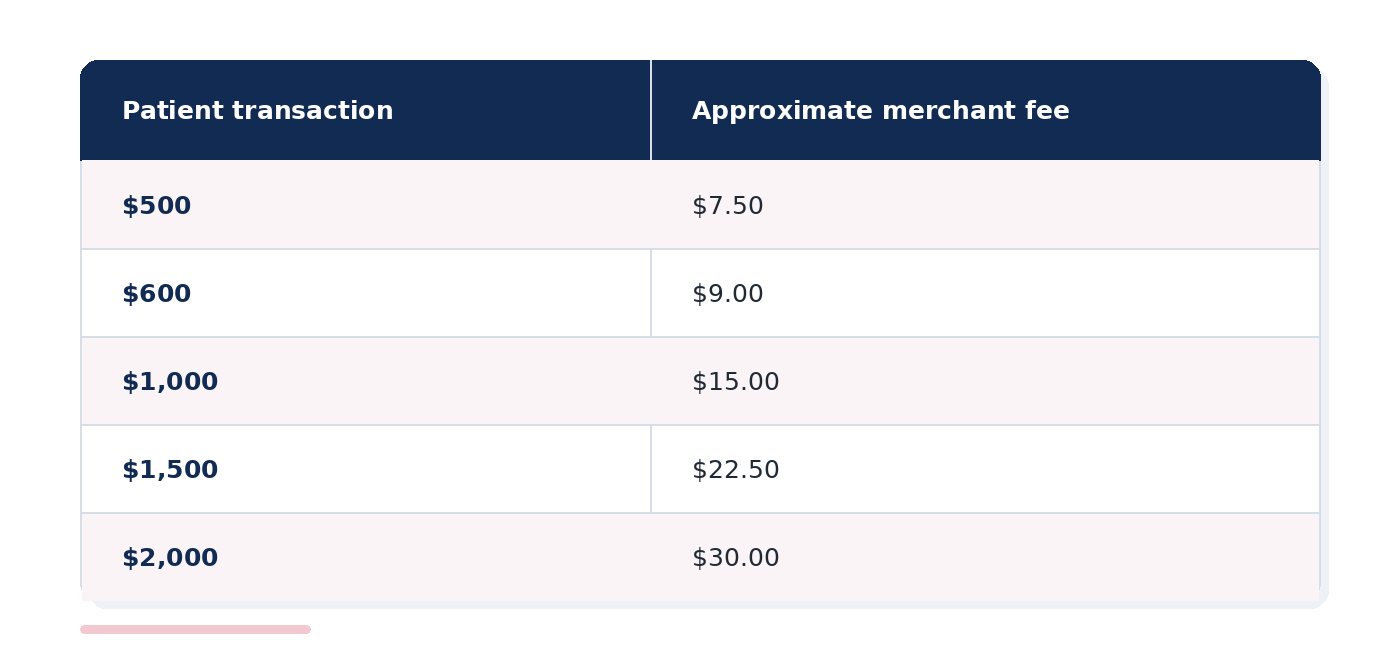
If your clinic processes 100 card payments averaging $600 each month, your card revenue would be approximately $60,000.
At a 1.5% merchant fee, that represents:
-
$900 per month
-
$10,800 per year
This cost may previously have been recovered through card surcharges but will need a plan to manage these cost differently from 1 October.
How do you calculate the impact on your clinic?
Review your bank or payment-provider statements for the past 12 months to understand your current merchant fees and how much you have recovered through card surcharges.
Use this formula:
Monthly card sales × merchant-fee percentage = estimated monthly processing cost
For example:
$60,000 × 1.5% = $900 per month
This equals approximately $10,800 each year that your clinic may need to absorb or recover through its overall pricing.
Remember, replacing $900 in fees requires $900 in additional gross profit - not simply $900 in additional sales.
How can your clinic reduce the impact?
Review your clinic pricing
Ensure your treatment prices reflect the complete cost of delivering each service for cosmetic nurses and aesthetic clinics, including products, consumables, prescribing costs, wages, overheads and merchant fees.
If required, consider a carefully planned general pricing adjustment. Any increase must form part of your overall pricing and must not be presented as a replacement card surcharge.
Compare merchant providers
Ask your bank or payment provider for a complete breakdown of:
-
Card-processing rates
-
Terminal and online gateway fees
-
Monthly fees
-
Domestic and international card rates
-
Contract and exit fees
Even a small reduction in your merchant rate could create meaningful annual savings. Remember to always negotiate with your current provider before switching.
What should you do before 1 October?
-
Review your merchant fees from the past 12 months.
-
Confirm your actual processing rate.
-
Compare payment providers and negotiate a better rate.
-
Review your clinic pricing and profit margins.
-
Update your website, price lists and booking system.
-
Remove automatic card surcharges from your payment systems
-
Brief your team on the new payment requirements.
Taking these steps before 1 October will help your clinic and the cosmetic nurses and aesthetic professionals running it to understand the true financial impact of the Australian card surcharge ban and prepare for the additional cost.
Getting your pricing wrong on this could cost your clinic thousands over a year. Juv'ae's business and financial mentoring helps you price it correctly, before 1 October.



.png)
.png)